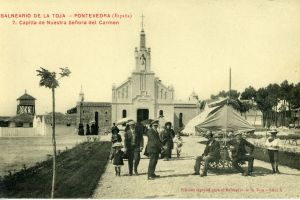
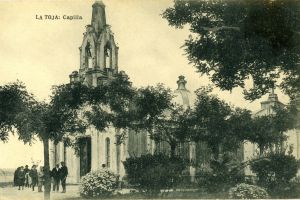
Chapel of San Caralampio


Reference: p002 Category: Monumentos Visits: 15.798
Tap the photo to enlarge it
Why is the chapel covered with scallop shells?
You should not leave without knowing that you have on your right the only chapel in the world covered with scallop shells.

Originally, when it was built in 1909, it was not. Its story is the result of chance. The facade where the altar is located is south oriented and the rains continually hit its walls, which caused humidity and deterioration in the structure of the construction. Raimundo Riestra Calderón, second Marquis of Riestra, called in a builder from the town of O Grove, Anselmo Millán, in the late 1940s, to find a solution to this problem that had been dragging on for almost four decades. The man told him that a traditional way of preventing water penetration was to overlap scallop shells across the entire facade, causing the rain to run off the surface. The marquis found it a great idea and accepted the proposal. When they finished covering that facade, he liked the result so much that, as manager of the spa, he had the entire chapel covered with shells. It was a slow work that took several years. It began in the late 1940s and ended in the early 1950s.

And one last detail, if you could travel back in time 120 years to the same place where you are, you would not step on land, but you would be in the water together with the chapel. Almost all of this garden was an old salt mine that loses its origins in the most remote past. It was filled in at the beginning of the 20th century.

The chapel is the work of the architect from Ourense, Daniel Vázquez-Gulías, and was inaugurated on 28th June 1909.

1.32Mb
Transcript
A Toxa island chapel. Why is the chapel covered in scallop shells? You shouldn't leave without looking to your right to see the world's only chapel covered in scallop shells. When it was built in 1909, they weren't there. It happened by chance. The wall behind the altar faces south, and it was constantly battered by heavy rain, which was causing damp and structural damage. In the late 1940s, Raimundo Riestra Calderón, the second Marquis of Riestra, asked Anselmo Millán, a builder from the town of O Grove, to find a solution to this water damage, which had been a problem for nearly 40 years. The builder told him that a traditional waterproofing method was to clad the whole surface in scallop shells. So the water would just slide off the surface and keep the interior dry. The Marquis thought this was a great idea, and they got started. When that wall was finished, he liked the results so much that as the manager of the spa, he ordered the whole chapel to be covered with shells. This was slow work and took a few years. It began in the late 1940s and was finished in the early 50s. The chapel was designed by an architect from Orense, Daniel Vázquez-Gulías, and opened to the public on the 28th of June, 1909. A curious detail, almost all the garden, including the spot where you're standing, was once a saltworks, which was dug up in the early 20th century. Don't miss the next story, which is just 60 metres away. Look at the map.